Finding casual outfits that look and feel right when you are petite comes down to one thing: proportion. It is not about wearing special clothes or following strict rules. It is about understanding how fabric falls on a smaller frame and making small adjustments that change everything.
If you are tired of jeans that drag on the floor, tops that swallow your shape, or dresses that hit you at the wrong spot, this guide will help. We will walk through what actually works, why it works, and how to build a casual wardrobe that fits your life.
What Counts as Petite?

Petite in fashion does not mean thin. It refers to height. Most brands classify petite as women who are 5 feet 4 inches and under. The term comes from the French word for small, and in clothing, it describes a size range designed for shorter women.
That matters because standard clothing is cut for a taller frame. Sleeves run long. Waists sit too low. Hems pool on the ground. Petite sizing adjusts the vertical measurements while keeping the same overall shape. It is not about making clothes smaller all over. It is about moving key points, like the waist and knee, to match a shorter body.
Why Proportion Matters More Than Size
Here is the truth about petite style: two women can wear the same size and look completely different because of how their bodies are proportioned. One might have a longer torso and shorter legs. Another might have a shorter torso and longer legs. Petite sizing helps, but it still cannot account for every body.
That is why learning a few proportion tricks will serve you better than buying every piece in a petite department. When you understand where to place a hem, how to balance volume, and what creates a long line, you can make almost anything work.
Read Also: Casual Women Outfits With Leggings
The Foundation: Fit Comes First
Before you think about style, think about fit. A $30 pair of pants that fits your waist, hips, and inseam will look better than a $300 pair that does not.
For petites, the inseam is often the biggest problem. Standard pants are cut for an inseam around 30 to 32 inches. Many petite women have an inseam closer to 25 to 28 inches. That is why pants drag, bunch at the ankle, or need constant rolling.
When you shop, look for your actual inseam measurement, not just the word "petite" on the label. Some brands list the inseam for each size. Others do not, but you can often find it in the product details or by asking customer service. Knowing your number saves time and returns.
Tailoring is also your friend. A simple hem costs very little and transforms how a garment looks on you. If you find pants that fit everywhere except the length, buy them and get them hemmed. The difference is immediate.
Building a Casual Capsule for a Petite Frame
A capsule wardrobe is a small collection of pieces that all work together. For petites, the goal is pieces that fit well, mix easily, and do not overwhelm your frame.
You do not need a lot. A focused set of items can create dozens of outfits. The key is choosing pieces that share a color story and a similar level of formality.
Here are the categories worth focusing on.
Bottoms That Work With Your Legs
The best bottoms for petite women share one quality: they create a clean line from waist to hem. That means no bunching, no dragging, and no fabric that pools around your ankles.
Straight-leg jeans are a reliable choice. They skim your legs without clinging, and when hemmed to the right length, they look intentional. Look for a rise that sits at or just below your natural waist. High rises can work, but they need to fit properly at the waist or they will gap.
Cropped kick-flare jeans are another strong option. The slight flare at the hem balances the leg, and because the hem stops above the ankle, your shoes stay visible. That exposed ankle creates a break that actually makes your legs look longer, not shorter.
Wide-leg pants can work, but the fit has to be right. Look for a high rise that sits close to your body through the hips and thigh, then falls straight or slightly wide. Avoid anything too baggy. The volume should be controlled, not loose everywhere.
Linen trousers with a drawstring waist are a practical choice for casual days. The drawstring lets you adjust the fit without a belt, and linen keeps you cool. Look for a slightly tapered or straight leg rather than a full wide leg.
Shorts should hit at a length that feels comfortable to you. A 3 to 4 inch inseam is a common sweet spot for petites because it shows enough leg without cutting you off at the widest part of your thigh.
Tops That Balance Your Shape
The right top does two things: it defines your waist, and it does not add bulk where you do not need it.
Cropped tops are genuinely useful for petites. When a top ends at your natural waist, your legs start higher visually. That makes them look longer. A cropped cardigan, a slightly shortened tee, or a top that hits right at the waistband all achieve this.
Fitted tanks and tees work well as base layers. They sit close to the body, which keeps your silhouette clean. If you want to add volume, do it with an outer layer rather than your base.
Button-down shirts can work if you style them right. A full tuck or a front tuck defines your waist and keeps the shirt from swallowing you. You can also roll the sleeves to your elbow, which brings the eye up and prevents the fabric from overwhelming your hands.
Wrap tops are a quiet hero for petites. The V neckline draws the eye down and creates a vertical line. The wrap also naturally defines the waist without needing a belt.
Layers That Add Without Overwhelming
Layers can be tricky when you are petite. Too much fabric and you disappear inside your clothes. The solution is to choose layers that are tailored and not too long.
Cropped jackets work well. A jacket that ends at your hip or just above keeps your legs visible. A longer jacket can work too, but it needs to be fitted through the shoulders and torso.
Cardigans are a casual staple. A slightly cropped cardigan in a light knit adds warmth without bulk. Wear it open over a fitted top, or button it and tuck the front slightly.
Vests and waistcoats are having a moment, and they work surprisingly well for petites. A fitted vest creates structure, defines the waist, and can be worn alone or layered. Look for one that hits at your natural waist or just below.
Coats should hit at a length that flatters you. A coat that ends at mid-thigh or just above the knee keeps your legs visible. A very long coat can work if it is tailored, but it needs to be the right shape.
Outfit Ideas You Can Actually Wear
Now let us put the pieces together. These are not complicated formulas. They are simple combinations that work because they follow the principles of proportion.
The Everyday Errand Outfit
Start with a pair of straight-leg jeans that fit your waist and are hemmed to your ankle. Add a fitted tee in a neutral color. Layer a cropped cardigan over the top, leaving it open. Finish with low-profile sneakers or ballet flats.
This works because the jeans create a clean line, the tee keeps the base fitted, and the cardigan adds interest without bulk. The cropped length of the cardigan lifts your waist visually.
The Casual Lunch or Coffee Outfit
Try a midi skirt in a soft fabric. Look for one that hits at or just below your knee, or a bit lower if you prefer. Pair it with a fitted tank or a short-sleeve blouse. Add a light layer like a denim jacket or a cropped cardigan if you need it. Finish with sandals or a low heel.
Midi skirts work well for petites because the length is flexible. As long as the skirt does not cut you off at the widest part of your calf, it creates a flattering line. A slight A-line or slip shape moves well and does not cling.
The Polished but Comfortable Outfit
Start with a pair of tailored pants, like a slim-straight linen or a cropped wide-leg style. Add a button-down shirt, tucked in or front-tucked. Layer a fitted vest over the shirt if you want more structure. Finish with loafers or low heels.
This combination works because the tailored pants fit close through the hips and thigh, the tuck defines your waist, and the vest adds a modern touch. It looks intentional without feeling fussy.
The Warm Weather Outfit
Reach for a matching set. A linen top and shorts in the same color creates an unbroken line that makes you look taller. Add a straw bag and simple sandals. If you want a layer, choose a lightweight button-down worn open over the set.
Monochrome dressing is one of the easiest tricks for petites. When your top and bottom are the same color or close shades, the eye travels from head to toe without interruption. That creates the illusion of length.
The Cool Weather Outfit
Start with fitted pants or jeans. Add a slim turtleneck or a fitted long-sleeve tee. Layer a cropped sweater or a fitted vest over the top. Finish with a coat that hits at or above the knee, and boots or sneakers that feel comfortable.
The key here is keeping your layers fitted. A bulky sweater on top of a bulky coat on top of baggy pants will make you look wider, not taller. Fitted layers create a streamlined shape that works on any frame.
Styling Tricks That Make a Difference
These are small adjustments that add up. Try one or two and see how they change how your outfits look and feel.
Tuck your top. A full tuck or a front tuck defines your waist and makes your legs look longer. An untucked top that hits at your hip can make your torso look longer and your legs look shorter.
Show your ankles. A pant hem that stops at or just above your ankle creates a break that keeps your legs looking long. Pants that pool at the floor do the opposite.
Choose shoes that blend. Nude or skin-tone shoes create an unbroken line from your leg to your foot, which adds visual height. Pointed toes also elongate the leg line.
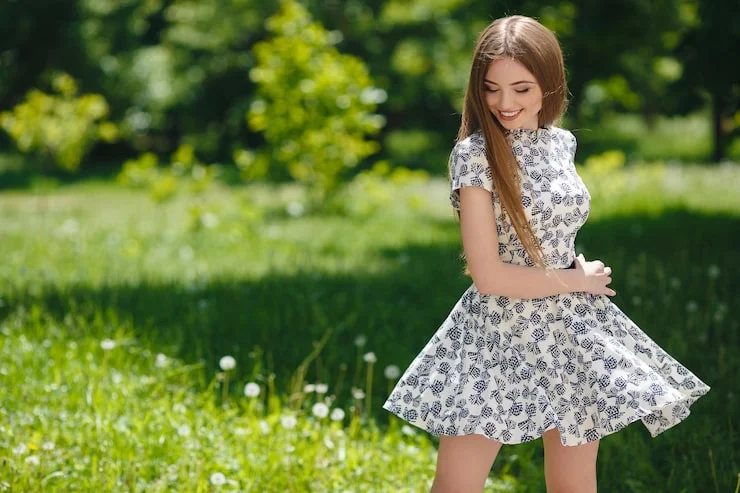
Keep prints small. Large, bold prints can overwhelm a petite frame. Smaller prints, subtle patterns, or solid colors keep the focus on you rather than the fabric.
Balance volume. If you wear wide-leg pants, keep your top fitted. If you wear a loose top, choose a slimmer bottom. The goal is balance, not extremes.
Use a belt. A slim belt at your natural waist defines your shape and breaks up a long torso. It also adds a polished detail to a simple outfit.
Roll your sleeves. If your sleeves are too long, rolling them to your elbow brings the eye up and prevents fabric from covering your hands. It also looks intentional.
You May Also Like: Simple Saree Styling Ideas For College Girls
Common Mistakes to Avoid
Even with the best intentions, some habits work against a petite frame. Here is what to watch for.
Wearing clothes that are too big. Oversized does not mean flattering. A top that hangs off your shoulders or pants that bag at the knee will make you look smaller, not stylish. Fit matters.
Ignoring your inseam. Buying pants without checking the inseam leads to dragging hems and bunched fabric. Know your number and look for it.
Choosing the wrong rise. A rise that is too high can gap at the waist. A rise that is too low can cut you off at an unflattering spot. Your natural waist is usually a safe guide.
Letting hems pool. A hem that drags on the ground makes your legs look shorter and your outfit look sloppy. A simple hem fixes this.
Wearing overwhelming patterns. Large florals, giant plaids, or busy prints can take over your frame. Smaller scale patterns or solids work better.
Skipping tailoring. If something fits everywhere except one spot, tailoring can fix it. Do not settle for almost right.
Frequently Asked Questions
What height is considered petite?
Most brands consider women 5 feet 4 inches and under to be petite. Some brands extend the range slightly, but 5 feet 4 inches is the standard cutoff.
Do I have to shop in the petite section?
No. Petite sizing is helpful, but it is not the only option. You can also buy regular sizes and have them tailored. The important thing is that the clothes fit your body, not the label.
Can I wear wide-leg pants if I am petite?
Yes. The key is finding a pair that fits close through the hips and thigh, then falls straight or slightly wide. Avoid very baggy styles, and make sure the length is right. A cropped wide-leg or a slim wide-leg works better than an oversized pair.
What shoe styles work best for petites?
Pointed toes and skin-tone shades create a long line. Low heels or flats are fine as long as the proportion works with your outfit. Avoid heavy, chunky shoes that can make your legs look shorter.
How do I make a maxi dress work?
Choose a dress that is fitted through the body rather than loose. Make sure the hem grazes your shoes or hits just above the ankle. Avoid extra fabric that pools. A slim ribbed knit or a slip dress in a solid color works well.
Should I wear high-waisted or mid-rise jeans?
It depends on your proportions. High-waisted jeans define your waist and lengthen your legs, but they need to fit properly at the waist. Mid-rise can work if you have a shorter torso. Try both and see which feels more comfortable and flattering on you.
How many pieces do I need for a casual wardrobe?
You do not need a lot. A focused set of 10 to 15 pieces can create dozens of outfits if they mix well. Focus on bottoms that fit, tops that define your waist, and layers that add interest without bulk.
Final Thoughts
Dressing well as a petite woman is not about following a long list of rules. It is about understanding a few principles and applying them in a way that feels like you.
Proportion matters more than size. Fit matters more than brand. And the best outfit is one you feel comfortable and confident in.
Start with bottoms that fit your waist and inseam. Add tops that define your shape. Layer with intention. Show your ankles. Keep your prints small. And do not be afraid to tailor.
You do not need a whole new wardrobe. You need a few pieces that work, and the knowledge to put them together. Once you have that, getting dressed becomes easier, faster, and a lot more enjoyable.