
Turning 40 does not mean you need to trade your comfortable clothes for stiff, formal pieces. It does mean paying closer attention to how things fit and how they work together. The difference between looking sharp and looking sloppy often comes down to small details: the length of your shorts, the cut of your jeans, the structure of your shirt.
This guide walks through the specific changes that make the biggest difference. You will find practical advice on what to keep, what to replace, and how to build outfits that feel relaxed but still look intentional. No complex rules. No chasing trends meant for people half your age. Just clear guidance on dressing well for the body and casual outfits for men over 40.
Why The Word "Casual" Gets Confusing After 40?
Casual is one of the least helpful words in fashion. It can mean anything from gym clothes to a collared shirt with nice trousers. When a friend says "wear something casual," they probably mean you should look relaxed but not like you just rolled out of bed.
The real issue for men over 40 is that the body changes, but the clothes in the closet often do not. Muscle mass declines by roughly three to five percent per decade after 30 . Weight may stay the same while shifting around. A shirt that fit perfectly at 32 might now pull at the middle and hang loose at the shoulders.
This is why buying a larger size rarely solves the problem. A bigger shirt adds width where you do not need it and leaves the shoulders looking sloped. The better approach is finding the same collar size in a cut described as classic or relaxed. That adds room where the body gained it without making you look like you are wearing someone else's clothes .
The goal is not to look younger. It is to look like a man who knows what works for him.
Start With The Fit: What Actually Changes After 40?

Fit matters more than brand, price, or trend. A well-fitting inexpensive shirt looks better than a poorly fitted expensive one. Here is what to check.
Shoulders. The seam where the sleeve meets the body should sit at the edge of your shoulder bone. If it droops down your arm, the shirt is too big. If it pinches inward, it is too small.
Torso. The fabric should skim your body without clinging. You should be able to pinch an inch or two of fabric at the sides. If the shirt pulls across your chest or stomach when you button it, it is too tight. If it billows out like a tent, it is too loose.
Length. A t-shirt or polo should end around the middle of your trouser fly, not halfway down your thigh . Shirts meant to be tucked in should be long enough to stay put when you raise your arms.
Trousers. The waistband should sit at your natural waist, not below your belly. The leg should fall in a straight line without gripping your calf or puddling over your shoes. A slight break at the hem is fine. Heavy stacking is not .
Read Also: Men Outfit Ideas For Wedding
The Denim Question: What To Wear Instead Of Skinny Jeans
Skinny jeans had a long run, but they are not your friend anymore. When jeans grip your calves and narrow sharply at the ankle, they throw off your whole silhouette. Your top half can look bigger, your shoes can look oversized, and even a good shirt looks less natural because the lower half feels forced .
The better choice is a straight or slim-straight cut. This shape follows the body without fighting it. It gives your leg a clean line. It sits in the middle ground where you can wear it casually without looking like you are trying to dress like your son .
What to look for in jeans over 40:
Dark blue or medium wash denim works with almost everything. Navy polos, white t-shirts, Oxford shirts, suede jackets, and simple sneakers all pair naturally with it .
Avoid heavy fading, extreme distressing, and artificial whiskering. Those details date a pair immediately because they were fashionable in a specific window. They mark the wearer as someone who stopped shopping in that window .
The rise matters too. A very low rise falls below where a fuller waist naturally is and creates strain lines across the front. A mid-rise puts the waistband where your body already is, and the whole silhouette settles .
The hem should either break slightly over your shoe or stop cleanly at the top of it. Jeans that stack heavily at the ankle look sloppy. Jeans that stop too high look awkward .
Shorts: The Fastest Way To Look Better Or Worse
Baggy cargo shorts are one of the quickest ways to make a casual outfit look heavy. The big side pockets add bulk. The long length cuts your leg short. The loose fabric makes your lower half look wider and less controlled .
Cargo shorts have their place. If you are doing yard work, camping, or fishing, wear them. But for normal casual wear, they look too practical in the wrong way. They suggest the outfit was chosen for storage rather than style .
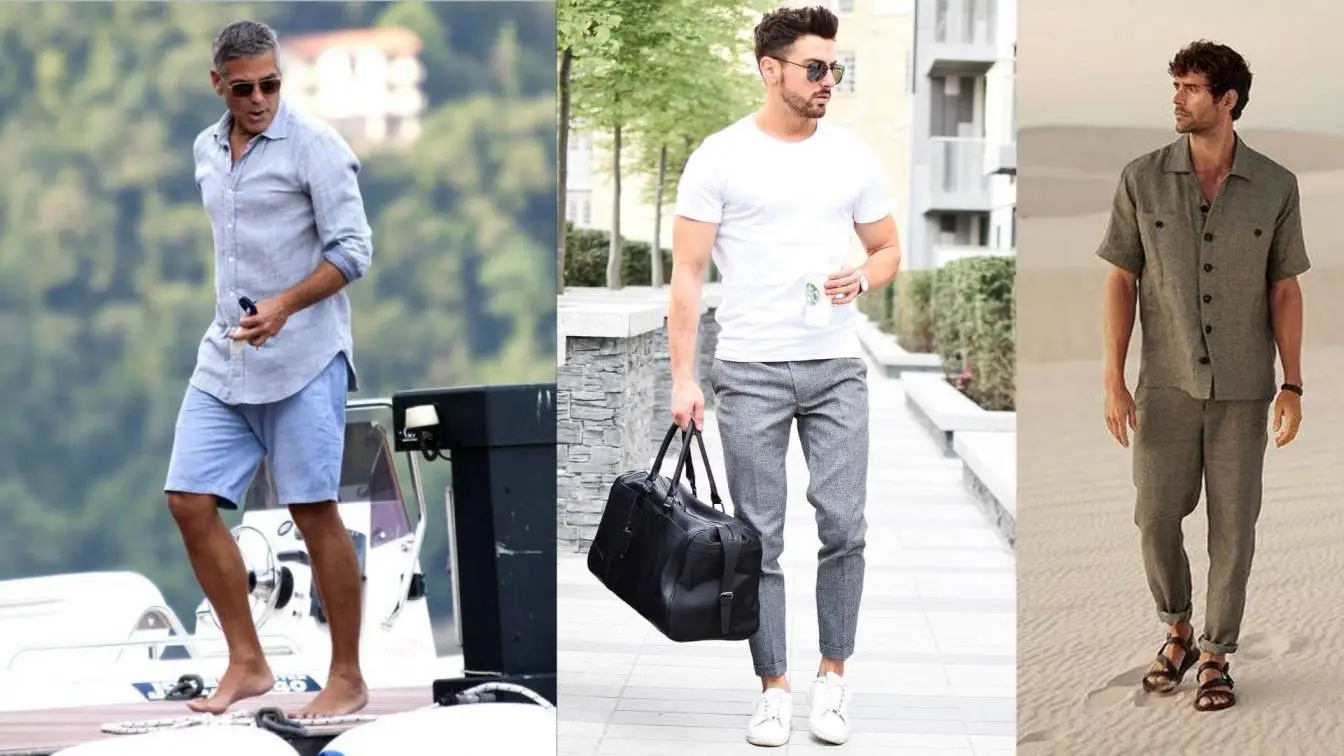
A better short has a cleaner shape. It should sit properly at your waist, fall above the knee, and avoid extra fabric around the thigh. For most men, a 7-inch or 8-inch inseam is a good starting point. That gives enough coverage without making your legs disappear .
Color matters too. Stone, navy, olive, khaki, faded black, and light blue are all easy to wear. They pair naturally with polos, t-shirts, linen shirts, and simple sneakers .
One simple rule: the pocket should never be the main feature of your shorts. Let the shape, fabric, and proportion do the work. A cleaner short makes your legs look longer, your shoes look better, and the whole outfit feel lighter .
Chinos And Casual Trousers: The Grown-Up Alternative
Chinos should be one of the most useful pieces in your wardrobe. They are cleaner than jeans, more flexible than dress trousers, and appropriate in a huge range of situations. But when they are too wide, too long, and made from limp fabric that collapses over your shoe, they perform worse than denim .
What to look for:
The waistband should sit correctly at your natural waist. The thigh should have room without excess. The leg should fall cleanly. The hem should stop before it starts puddling over your shoes .
Stone, khaki, olive, navy, and tobacco are the colors that work best. They are cleaner and more considered than washed-out beige, which can read as old office uniform .
If your chinos are too long, get them tailored. That single adjustment changes the entire read of the outfit. A clean hem makes the trousers look intentional rather than borrowed .
Tops: Moving Past The Graphic Tee And The Sloppy Hoodie
The t-shirt problem. A graphic tee worn as a daily default projects autopilot. The issue is not the graphic tee itself. Worn deliberately, it can work at almost any age. The problem is when it becomes the automatic choice every single day without any thought behind it. People read that signal clearly even if they never say it out loud .
A plain heavyweight cotton t-shirt in a dark or neutral color sits better on the body. It reads as more intentional. It works with far more of your wardrobe. The shoulder should sit correctly. The sleeve should have some shape. The length should land around the middle of your trouser fly. Thin, twisted cotton makes even a plain tee look sloppy. A slightly heavier jersey sits properly and holds its shape through the day .
The hoodie problem. A hoodie can be comfortable and useful. But some hoodies cross the line from relaxed to careless. Thin fabric, faded color, stretched cuffs, sagging pockets, and a loose hood can make you look like you left the house without finishing the outfit .
The issue is not age. The issue is structure. After 40, soft clothes still need shape. A casual top should sit well on your shoulders, hold its form, and make your body look cleaner rather than collapsing around your torso. A structured sweatshirt or a heavier knit gives you the comfort of a hoodie without the careless look .
Collared shirts. A collar frames your face. It makes casual clothing feel more finished. It gives you structure without pushing you into formal dressing. That is why polos, Oxford shirts, and chambray shirts belong in your wardrobe .
The polo is the easiest first step. It keeps the relaxed feeling of a t-shirt while looking sharper at lunch, on holiday, or on a warm evening out. Avoid shiny golf fabrics, oversized logos, and sleeves that float around your arm .
An Oxford shirt brings texture and ease. You can wear it open over a tee, tucked into chinos, or layered under a blazer. White and light blue do the most to brighten your face .
Chambray adds a rugged note. It gives an outfit a little workwear energy without tipping into costume.
You May Also Like: Casual Date Night Outfit Ideas For Men
Shoes: Where Most Outfits Are Won Or Lost
Sneakers are fine after 40. The mistake is not wearing them. The mistake is choosing the wrong kind .
Big soles, strange panelling, shiny mesh, neon accents, heavy orthopedic shapes, and aggressive running technology all have the same effect. They make the shoes the loudest thing in the room. Everything else in your outfit has to work harder as a result
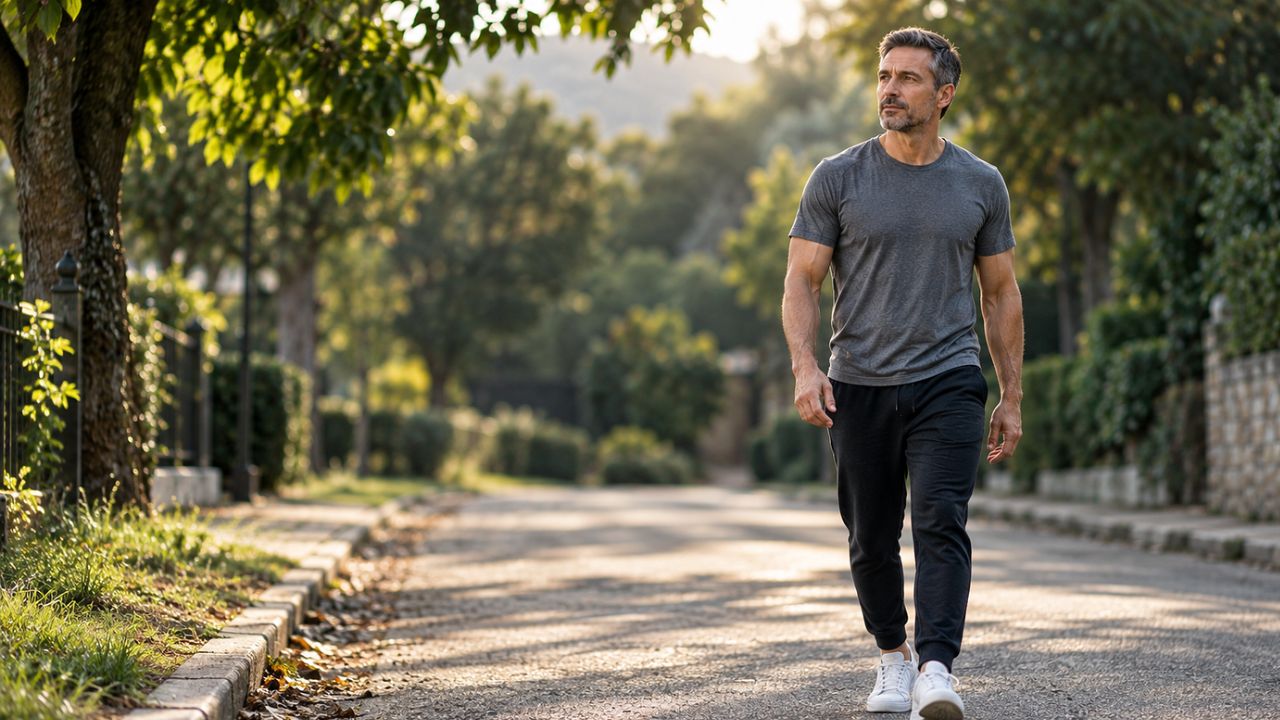
The sweet spot for sneakers over 40 is clean, simple, and low profile. Smooth shapes. Muted colors. Minimal logos. Nothing that looks like it was designed for a competitive sporting event unless you are actually dressed for one .
White, off-white, beige, grey, and navy work with almost everything. A clean, low-profile sneaker in one of those colors makes your jeans or chinos look sharper. A bulky, high-tech sneaker makes even a well-hemmed trouser look messier at the hem and heavier at the foot .
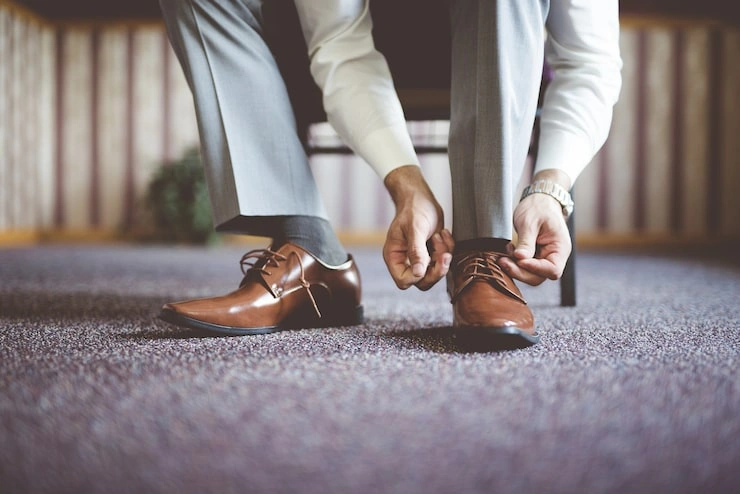
The alternative that works in almost every room is a leather derby or a chukka boot in brown suede. Both are more forgiving than a sneaker if the venue turns out to be nicer than expected. Neither is formal enough to look strange in a pub .
Color: Why Black Is Not Always Your Friend
Skin tone and hair color both change with age. Skin undertones behave differently against grey than they did against brown or black. Grey hair and skin that has lost some pigment contrast are overwhelmed by black. A man who wore black every weekend at 32 can look drained in it at 50 .
Colors that work well after 40:
Navy, charcoal, olive, and brown are reliable foundations. They provide contrast without being harsh. They work with most skin tones .
White, cream, and light blue near the face reflect warmth back onto your skin. They make your complexion look healthier and more alive .
Muted versions of color work better than saturated ones. A deep burgundy reads differently from a bright primary red. A warm olive reads differently from a vivid lime green. The underlying color families are the same. The saturation and depth are what shift them from feeling youthful and high-energy to feeling considered and authoritative .
If your wardrobe is built almost entirely on black, grey, and white, introduce one or two pieces in muted warm tones. Pay attention to what happens to the overall impression you make. A caramel coat over a navy roll-neck. A burgundy sweater with stone chinos. Small changes can shift a lot .
Belts And Accessories: Finish Quietly
A belt is a small detail, but it reveals a lot about how carefully you finish an outfit. The most common mistake is trying to use one accessory to make the whole outfit feel more expensive or more interesting. The buckle gets bigger. The logo gets louder. The leather gets heavily distressed. The result is almost always the opposite. The belt starts pulling attention to the wrong part of the casual outfits for men over 40.
The rule for belts after 40 is straightforward. The belt should finish the outfit quietly. Black leather with black shoes. Brown leather with brown shoes. Tan or suede when the outfit is more relaxed and the footwear supports it. Simple buckle. Clean edge. No fake distressing. No oversized metal plate. No prominent logo .
The belt and shoes should feel like they belong to the same man and the same outfit. They need to share the same register in terms of formality, color, and finish .
Putting It All Together: Three Outfits That Work
Weekend brunch. A fine gauge polo, dark blue jeans, and clean leather sneakers. Add a lightweight jacket if the weather calls for it. The polo gives you a collar and some shape. The jeans are straight or slim-straight with no distressing. The sneakers are simple and clean .
Dinner out. A navy unstructured blazer over a white Oxford shirt, mid-wash straight-leg jeans, and brown suede chukka boots. The blazer lifts the jeans and shirt into something sharper without making you look like you are going to the office. The boots are more forgiving than sneakers if the restaurant turns out to be nicer than expected .
Warm weather day. A clean short-sleeve button-up or knit polo, stone or olive chinos cut to fall above the knee, and low-profile sneakers. The shorts have no cargo pockets. The shirt has a collar. The colors are calm and work together without trying too hard .
Conclusion
Dressing well after 40 is not about following a long list of rules. It is about paying attention to fit, choosing clothes that have some structure, and avoiding the pieces that were designed for a different version of your life. You do not need a new wardrobe. You need fewer weak links. Start with one swap. Replace the baggy cargo shorts with a cleaner pair. Move from skinny jeans to straight-leg denim. Trade the worn hoodie for a structured sweatshirt. Each small change lifts the whole outfit.