Finding the right business casual outfit after 50 is not about following every trend. It is about building a small set of clothes that fit well, feel comfortable for a full workday, and make you look like someone who knows what she is doing. The goal is simple: you want to walk into a meeting and feel put together without spending an hour in front of the mirror.
This guide walks through the pieces that matter most, how to combine them, and the small details that separate a polished look from a careless one. Every suggestion here is meant to be practical. You can use these ideas with clothes you already own or with a few smart additions.
Start With Fit, Not Fashion
The single most important thing about any work outfit is how it fits your body. A well-fitted jacket from an ordinary brand will always look better than an expensive jacket that pulls at the shoulders or hangs too loose. Poor fit makes any outfit look dated, no matter how much you paid for it .
What does good fit actually mean? For a blazer, the shoulder seam should sit right at the edge of your shoulder. If it droops past your shoulder bone, the jacket is too big. If it pinches, it is too small. The sleeves should end at your wrist bone so your hands are free to work. The jacket should close without pulling across your chest, and it should not feel tight when you reach forward.
For trousers, the waistband should sit at your natural waist without digging in or leaving a gap at the back. High-rise trousers are a strong choice because they create a clean line under a blazer and make your legs look longer . Low-rise trousers can create an awkward gap between the top and bottom halves of your outfit, especially when you business casual outfits for women over 50.
Skirts should allow you to sit and walk without riding up or twisting. A fit-and-flare shape works well because it defines the waist and gives you room to move . A straight or slightly A-line skirt in a fabric with some weight will hang better and look more professional than a thin, clingy one.
If a piece does not fit perfectly off the rack, take it to a tailor. Small changes like shortening a hem, taking in a waist, or adjusting a sleeve make a huge difference. This is one of the most useful things you can do for your work wardrobe.
Read Also: Blazer Outfit Ideas For Women Casual
The Blazer Is Your Most Useful Piece
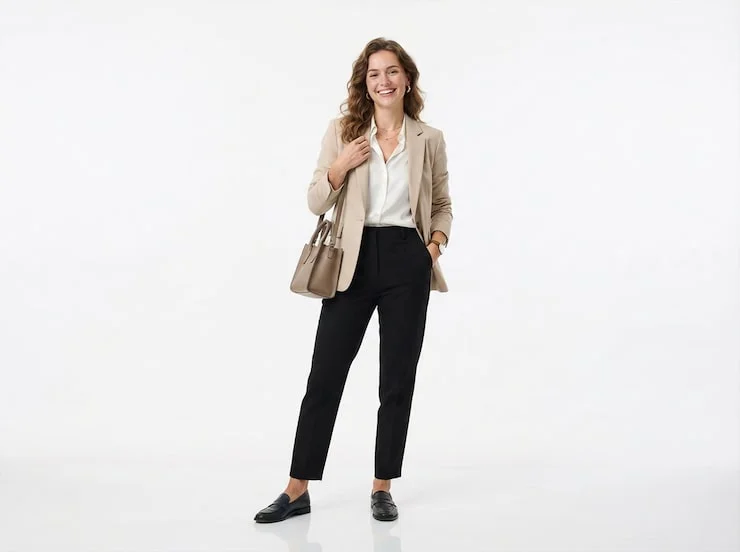
A blazer does more work than any other item in a business casual wardrobe. It adds structure to a simple outfit, makes a dress look more professional, and creates a clean shape that reads as authority . You do not need many blazers. Two or three good ones will cover most of your needs.
Choose a blazer with a bit of shape at the waist rather than a boxy cut. A slight waist definition frames your body without feeling tight. The fabric should have enough weight to hold its shape. Wool blends, crepe, and ponte work well because they resist wrinkles and keep their structure through a long day .
For color, start with navy, charcoal gray, or black. These colors pair with almost everything and look appropriate in any office setting. If you want something lighter, a beige or soft gray blazer can work for warmer months or more relaxed workplaces.
One useful trick is to wear a blazer over a dress. A simple dress on its own can look too casual for a meeting, but adding a structured blazer changes the whole outfit . The same works for a plain top and trousers. The blazer pulls everything together and makes the outfit look intentional rather than accidental.
Trousers That Work All Day
Trousers are the foundation of many business casual outfits, and they need to be comfortable enough to sit in for hours. Straight-leg and wide-leg cuts are the most flattering and practical choices after 50 . Straight-leg trousers work with every shoe and never look out of style. Wide-leg trousers look more modern and feel airy, but they need the right shoe to look polished. A loafer or a low heel works well. Flat sneakers with wide-leg trousers can make the outfit look too casual for a professional setting.
Fabric matters a lot with trousers. A thin, stretchy fabric might feel comfortable at first, but it can cling in the wrong places and lose its shape by the afternoon. Look for fabrics with some body, like a wool blend, a good quality ponte, or a cotton blend with a bit of structure. These fabrics hold their shape and look more expensive than they are.
Color is straightforward here. Black, navy, gray, and beige cover almost every need. A pair of white or cream trousers can be a nice change in spring and summer, but they show wrinkles more easily, so choose a fabric that resists creasing.
Tops That Do Not Compete
The top you wear under a blazer or with trousers should be simple. Restraint is the point . A clean neckline, a fabric with a slight sheen or a smooth texture, and a color that works with your blazer is all you need. Ruffles, sheer fabrics, and anything too tight send the wrong message in a professional setting.
A white or cream blouse is one of the most useful things you can own. It works with every blazer color, looks clean on video calls, and can be worn with trousers or a skirt. A pale blue blouse is another good choice that adds a bit of color without being loud. Silk, satin-effect fabrics, or a high-quality cotton blend feel good against the skin and look polished .
For colder months, a fine-knit sweater in a neutral color can replace a blouse. A high-neck or crew-neck knit under a blazer looks modern and feels warm without adding bulk. Avoid heavy, chunky knits under a blazer because they make the jacket fit poorly and can look too casual for work.
You May Also Like: Casual Women's Outfits That Make Guys Go Crazy
Dresses and Skirts: Simple Solutions
A dress can be the easiest business casual outfit because it requires almost no thinking. You put it on, add shoes and a bag, and you are done. The key is choosing a dress with enough structure and length to look professional.
A fit-and-flare dress works well because it defines the waist and allows you to move comfortably . A sheath dress in a fabric with some weight also works, especially under a blazer. Avoid dresses that are too short, too tight, or made of thin, clingy fabric. Mid-length dresses that hit at or just below the knee are a safe choice for most workplaces.
If you want to wear a dress but feel it is too plain, add a blazer or a structured cardigan. A simple dress with a blazer looks intentional and polished. The same dress without the layer can look like you are heading to a weekend brunch instead of a meeting .
For skirts, a mid-length A-line or straight skirt in a neutral color is easy to style. A patterned skirt, like a classic check, can add interest to an otherwise plain outfit, but keep the pattern simple and the colors muted . Pair a patterned skirt with a solid top and a blazer so the pattern does not overwhelm the look.
Shoes That Support You
Your shoes need to do two things: look polished and feel comfortable for a full day. After 50, comfort is not optional. If your feet hurt, it shows in how you stand and walk, and that affects how confident you look.
Leather loafers are the best starting point. A slim penny loafer or a bit-detail loafer in black, tan, or dark brown looks professional in almost any setting and becomes more comfortable as you wear them . Low block heels or kitten heels work for days when you want a bit more formality. A block heel gives you height without the instability of a thin stiletto.
What to avoid: very high heels, platform shoes, and overly casual sneakers. A clean, simple sneaker can work in some very relaxed offices, but in most business casual settings, a loafer or low heel sends a more appropriate message. Also, keep your shoes clean. Scuffed or dirty shoes make even a good outfit look careless .
Colors and Patterns: Keep It Simple
The easiest way to look put together is to use a small set of colors that work together. Black, white, gray, navy, and beige form a reliable base . You can build almost any outfit from these five colors and know it will look appropriate.
If you want to add color, choose one color at a time. A muted blue sweater, a soft green blouse, or a burgundy bag can add interest without making the outfit look busy. Avoid bright, saturated colors and large, multi-color patterns for work. They can look too loud in a professional setting and are harder to combine with other pieces .
Patterns can work if they are classic and subtle. A small check, a fine stripe, or a simple geometric print in muted colors is fine. A large floral or a busy abstract print is harder to wear well at work. If you wear a patterned piece, keep everything else solid so the pattern stands out without competing.
Accessories and Details That Matter
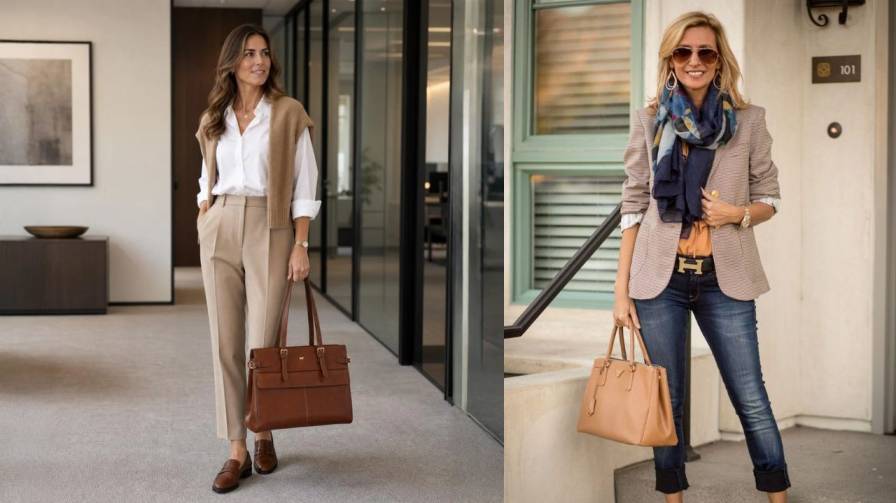
Small details have a big effect on how polished you look. A leather bag, a simple watch, and a pair of small earrings can make a basic outfit look finished . You do not need much. One or two well-chosen accessories are enough.
A structured leather tote is the most useful bag for work. It should hold what you need without losing its shape. Black is the safest color, but tan or camel works well too and feels a bit warmer. Avoid bags with large logos or lots of hardware. A clean, simple bag looks more professional .
Jewelry should be simple and not distracting. Small earrings, a thin necklace, or a simple bracelet are enough. Large, noisy jewelry can be distracting in a meeting. A watch is both useful and business casual outfits for women over 50.
One detail that is easy to overlook: keep your clothes pressed. Wrinkled fabric makes even an expensive outfit look careless . A quick press with an iron or a steamer before you leave the house takes two minutes and makes a visible difference. Also, check for loose threads, missing buttons, and pilling. These small flaws add up and make an outfit look worn out.
Putting It Together: Outfit Formulas
Here are a few combinations that work for most business casual settings. Use these as starting points and adjust based on your office and your personal style.
The reliable meeting outfit: Navy blazer, white blouse, gray straight-leg trousers, black leather loafers. This combination works in almost any professional setting. It looks clean, intentional, and appropriate without being stiff.
The dress made professional: A mid-length fit-and-flare dress in a solid color, a structured blazer over it, and low block heels. This is one of the easiest outfits to put together because the dress does most of the work. The blazer adds structure and makes the dress look appropriate for work .
The relaxed but polished day: A fine-knit sweater in cream or soft gray, wide-leg trousers in navy or black, and leather loafers. This outfit feels comfortable but still looks put together. It works well for days when you have a lot of sitting and walking.
The warm-weather option: A white or pale blue sleeveless blouse, a mid-length A-line skirt in beige or gray, and simple flat sandals or loafers. Add a light blazer if your office is air-conditioned. Keep the fabrics breathable and the colors light.
What to Avoid
Some pieces make it harder to look professional, no matter how you style them. Very casual items like worn denim, leggings, gym wear, and slouchy knit tops can weaken your professional presence . This does not mean you can never wear these things, but they are not the best choice for a business casual work environment.
Overly tight clothing, very short skirts or dresses, and anything with loud prints or lots of embellishment also work against you. The goal is to look capable and put together, not to draw attention to your outfit. Simple, well-fitted clothes in calm colors will always look more professional than trendy pieces that do not fit well or feel uncomfortable.
Creased clothing and dirty shoes are two of the most common mistakes. Both are easy to fix and both make a big difference in how polished you look . A quick check in the mirror before you leave, looking for wrinkles, stains, and scuffs, takes less than a minute.
Building Your Wardrobe Over Time
You do not need to buy everything at once. Start with the pieces you will wear most. A good blazer, two pairs of well-fitted trousers, and three simple tops will give you enough combinations for most of the workweek. Add a dress and a skirt when you find ones that fit well. Add shoes that feel comfortable from the first wear.
Choose quality over quantity. A few well-made pieces that fit properly and hold up over time will serve you better than a closet full of clothes that do not quite work. Natural fabrics like wool, silk, cotton, and linen blends tend to look better and last longer than synthetic fabrics . They also feel better against your skin, which matters when you are wearing something for eight hours or more.
The most important thing is that you feel comfortable in what you wear. If you are tugging at a waistband, adjusting a neckline, or worrying about your shoes, you cannot focus on your work. Clothes that fit well and feel good let you forget about what you are wearing and get on with your day. That is the real point of business casual dressing after 50: to look professional and feel at ease, so you can do your job without distraction.